Jump to HeaderJump to Main ContentJump to Footer
Michigan State University
Digital Experience Studio

University Communications and Marketing

Digital Experience Studio

  • Experience Program
    • Website Project Process
    • Working with a Vendor
    • Glossary
    • Taxonomy Data Dictionary
  • |
  • Experience Design
    • Website Strategy
    • Website Structure
    • Information Architecture and Navigation
    • User-Centered Design Conventions
    • Common UX Issues
    • Enterprise Design System
    • Content Planning
    • Creating Accessible Content
    • Taxonomy and Filters
  • |
  • Website Technology
    • Web Standards
    • Search Engine Optimization
    • Cascade CMS
    • Sitecore CMS
    • Content Hub Overview
    • Content Hub DAM
    • Content Hub Operations

    SitecoreAI

    Sitecore user login
  • |
  • Social Media
    • Alt Text Bookmarklet
    • Meta Ad Pixel
    • Social Media and Web Integration
    • Sprinklr

    Sprinklr

    Sprinklr user login
  • |
  • Analytics
    • Google Analytics (GA4)
    • Testing
    • Data Visualization

    Google Analytics

    Google Analytics user login
  • |
  • News and Events
    • News and Updates
    • Events and Trainings
Digital Experience Studio

University Communications and Marketing

  • Experience Program
  • Experience Design
  • Website Technology
  • Social Media
  • Analytics
  • News and Events

< Experience Program

  • Website Project Process
  • Working with a Vendor
  • Glossary
  • Taxonomy Data Dictionary

< Experience Design

  • Website Strategy
  • Website Structure
  • Information Architecture and Navigation
  • User-Centered Design Conventions
  • Common UX Issues
  • Enterprise Design System
  • Content Planning
  • Creating Accessible Content
  • Taxonomy and Filters

< Website Technology

  • Web Standards
  • Search Engine Optimization
  • Cascade CMS
  • Sitecore CMS
  • Content Hub Overview
  • Content Hub DAM
  • Content Hub Operations

SitecoreAI

Sitecore user login

< Social Media

  • Alt Text Bookmarklet
  • Meta Ad Pixel
  • Social Media and Web Integration
  • Sprinklr

Sprinklr

Sprinklr user login

< Analytics

  • Google Analytics (GA4)
  • Testing
  • Data Visualization

Google Analytics

Google Analytics user login

< News and Events

  • News and Updates
  • Events and Trainings
Digital Experience Studio > Website Technology > Content Hub >

Taxonomy Administration

MSU Tools and Resources

  • A to Z Index
  • Find People
  • Email
  • Tech Support
  • Social Media Directory

Communications Resources

  • University Communications and Marketing
  • University Trademarks and Licensing
  • MSU Brand Studio
  • MSU Editorial Style Guide
  • MSU Photos

Contact us

517-355-7505

Address

Michigan State University 408 West Circle Drive East Lansing, MI 48824

Follow Us

  • Visit our Facebook page
  • Visit our page on X
  • Visit our Instagram page
  • Visit our LinkedIn page
  • Visit our YouTube page
  • Visit our TikTok page

If you're having accessibility issues, please let us know.

Know MoreTransparency Reporting: Budget & Salary/Compensation
  • Contact Information|
  • Site Map|
  • Privacy Statement|
  • Site Accessibility|
  • Call MSU: (517) 355-1855|
  • Visit: msu.edu|
  • Notice of Nondiscrimination|

SPARTANS WILL|© Michigan State University|

Taxonomy Administration

Taxonomies are controlled lists of tags uses for many functions within Content Hub, including content organization and workflows. Taxonomies are meant to grow and change over time to adapt to system and user needs. However, there should be governance in place so that any changes are made judiciously. Asset admins have the ability to edit taxonomies, but any changes should be preapproved by system governance processes before being implemented. 

Note: To request or suggest changes to a taxonomy, contact Katie Kelly in University Communications and Marketing.

Expand the following tabs to view instructions for administering the Content Hub taxonomy.


Editing an Item in a Taxonomy

To edit a taxonomy item:

  1. Click the gear icon to open the system management page.
  2. On the manage page, click the Taxonomy card.
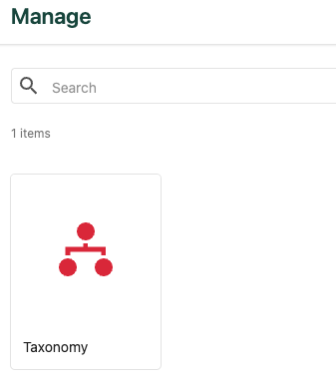
The taxonomy tile in the Content Hub administration panel
Fig. 1: The Taxonomy card on the Manage page.
  1. Navigate to the taxonomy to be edited. Use the pagination controls to view additional taxonomy lists if it does not appear on the first page.
  2. Click the taxonomy name to view items within the taxonomy.
    1. The taxonomy page contains the list of all members of that taxonomy.
    2. If a “has children” (branching tree) icon appears to the left of the member name, that item is a parent item with additional child items underneath. Click the parent item name to view its children.
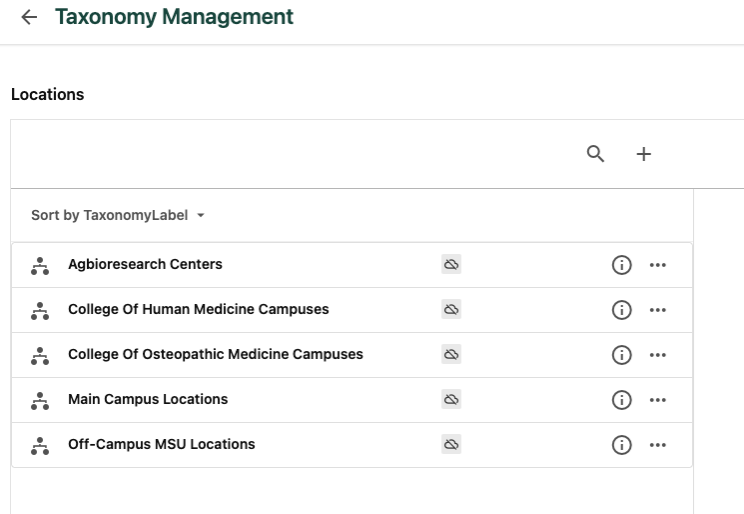
Parent item icons
Fig. 2: These options within the Locations taxonomy are parent items. The icon to the left of each item’s name indicates these all have child items beneath them.
  1. To edit a particular taxonomy item within the taxonomy:
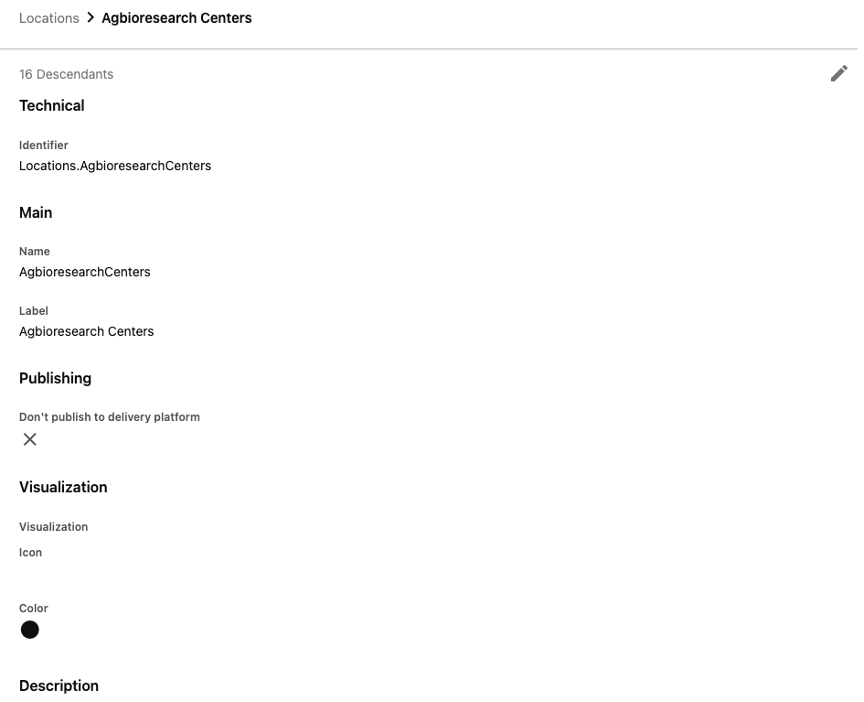
    1. Click the “i” (information) icon to the right of the item name.
    2. Click the pencil (edit) icon on the Item Details page to enable editing mode.
    3. Edit any field, as necessary. See below for a description of the fields. Note: The item Identifier cannot be edited once the item is created. This is a backend field used to ensure consistency in data. It is not visible to users.
    4. Click Save.
Taxonomy item details panel
Fig. 3: The details panel on a specific taxonomy item. 
Add an Additional Item to a Taxonomy

To add an additional option to a taxonomy:

  1. Navigate to the taxonomy to be edited. Use the pagination controls to view additional taxonomy lists if it does not appear on the first page.
  2. Click the taxonomy name to view items within the taxonomy.
  3. If adding a child item below a parent item, also navigate to the parent item and click the parent item name.  
  4. Click the “+” icon above the list of Taxonomy Labels on the left side of the page. A Create Item page appears.
  5. Fill in the taxonomy fields, beginning with Name. The Identifier field will automatically generate based on the Name field. See “Taxonomy Fields,” below, for more information on the available fields.
  6. Click Save.
Move Taxonomy Items

Taxonomy items can be moved within their taxonomy list. This can be useful when elevating children or when making one item a child of another. 

To move a taxonomy item:

  1. Navigate to the taxonomy to be edited. Use the pagination controls to view additional taxonomy lists if it does not appear on the first page.
  2. Click the taxonomy name to view items within the taxonomy.
  3. Click the three dots icon to the right of the taxonomy item name and select Move.
  4. Navigate to the new location where the item should be moved.
  5. Click the “Move to here” text above the taxonomy items to place the item.
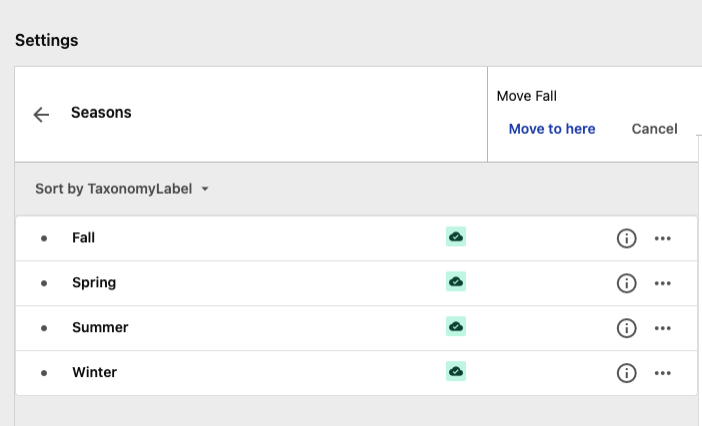
Move option
Fig. 4: The “Move to here” option appears when in item move mode.
Delete Taxonomy Items

To delete a taxonomy item, click the three dots icon to the right of the item name and select Delete from the menu.

Taxonomy Data Fields

The following fields are available in the details panel for a taxonomy item and can be edited by asset admins:

  • Identifier: This field should not be edited. It automatically resolves to the taxonomy name plus the “Name” of the taxonomy item when the item is created.
  • Name: Name for the field. Ideally, this field should only change if the Label changes. No spaces or special characters are allowed in this field.
  • Label: Label for the field. This is what is generally shown to users inside Content Hub.
  • Synonyms: Additional ways the taxonomy item can be identified through search. Each synonym should be comma delimited.
  • Description: Short description of the taxonomy item.
  • Don’t publish to delivery platform: This item should not be selected.
  • Icon: Icon shown for the taxonomy item. Generally left blank, but it is okay if an icon is selected.
  • Color: Color for the icon, if selected.

Related Information

Taxonomy Reference Guide

System users can review documentation for the various available taxonomy fields within Content Hub.

Learn more


Documentation updated: June 14, 2025

Is there an issue with this documentation? Report it here.