Jump to HeaderJump to Main ContentJump to Footer
Michigan State University
Digital Experience Studio

University Communications and Marketing

Digital Experience Studio

  • Experience Program
    • Website Project Process
    • Working with a Vendor
    • Glossary
    • Taxonomy Data Dictionary
  • |
  • Experience Design
    • Website Strategy
    • Website Structure
    • Information Architecture and Navigation
    • User-Centered Design Conventions
    • Common UX Issues
    • Enterprise Design System
    • Content Planning
    • Creating Accessible Content
    • Taxonomy and Filters
  • |
  • Website Technology
    • Web Standards
    • Search Engine Optimization
    • Cascade CMS
    • Sitecore CMS
    • Content Hub Overview
    • Content Hub DAM
    • Content Hub Operations

    SitecoreAI

    Sitecore user login
  • |
  • Social Media
    • Alt Text Bookmarklet
    • Meta Ad Pixel
    • Social Media and Web Integration
    • Sprinklr

    Sprinklr

    Sprinklr user login
  • |
  • Analytics
    • Google Analytics (GA4)
    • Testing
    • Data Visualization

    Google Analytics

    Google Analytics user login
  • |
  • News and Events
    • News and Updates
    • Events and Trainings
Digital Experience Studio

University Communications and Marketing

  • Experience Program
  • Experience Design
  • Website Technology
  • Social Media
  • Analytics
  • News and Events

< Experience Program

  • Website Project Process
  • Working with a Vendor
  • Glossary
  • Taxonomy Data Dictionary

< Experience Design

  • Website Strategy
  • Website Structure
  • Information Architecture and Navigation
  • User-Centered Design Conventions
  • Common UX Issues
  • Enterprise Design System
  • Content Planning
  • Creating Accessible Content
  • Taxonomy and Filters

< Website Technology

  • Web Standards
  • Search Engine Optimization
  • Cascade CMS
  • Sitecore CMS
  • Content Hub Overview
  • Content Hub DAM
  • Content Hub Operations

SitecoreAI

Sitecore user login

< Social Media

  • Alt Text Bookmarklet
  • Meta Ad Pixel
  • Social Media and Web Integration
  • Sprinklr

Sprinklr

Sprinklr user login

< Analytics

  • Google Analytics (GA4)
  • Testing
  • Data Visualization

Google Analytics

Google Analytics user login

< News and Events

  • News and Updates
  • Events and Trainings
Digital Experience Studio > Website Technology > Content Hub > Content Hub DAM >

Hidden Assets

Michigan State University

MSU Tools and Resources

  • A to Z Index
  • Find People
  • Email
  • Tech Support
  • Social Media Directory

Communications Resources

  • University Communications and Marketing
  • University Trademarks and Licensing
  • MSU Brand Studio
  • MSU Editorial Style Guide
  • MSU Photos

Contact us

517-355-7505

Address

Michigan State University 408 West Circle Drive East Lansing, MI 48824

Follow Us

  • Visit our Facebook page
  • Visit our page on X
  • Visit our Instagram page
  • Visit our LinkedIn page
  • Visit our YouTube page
  • Visit our TikTok page

If you're having accessibility issues, please let us know.

Know MoreTransparency Reporting: Budget & Salary/Compensation
Michigan State University
  • Contact Information|
  • Site Map|
  • Privacy Statement|
  • Site Accessibility|
  • Call MSU: (517) 355-1855|
  • Visit: msu.edu|
  • Notice of Nondiscrimination|

SPARTANS WILL|© Michigan State University|

Hidden Assets

What are Hidden Assets?

Hidden assets are assets that do not show up on the Assets page and are not viewable by any members of any user group other than the Asset Admin group. They cannot be deleted. Typical usage for hidden assets would be for things that are crucial for other web properties, such as font or CSS files that should never be deleted.

Note: Hidden assets are not to be confused with restricted visibility assets. Hidden assets cannot be deleted and cannot be seen by anyone without admin access. Restricted visibility assets can be limited so that only certain user groups can view and use the asset. See "Restricting Asset Visibility" for more information. 

Hidden Assets Page

Hidden assets are both created and viewed using the Hidden Pages page (as opposed to normal assets, which are uploaded using the Create page and viewed using the Assets page). The Hidden Assets page will show all hidden assets. A status filter enables filtering by approved or unapproved hidden assets. This asset approval status is also indicated using the icons visible below the asset thumbnail. 
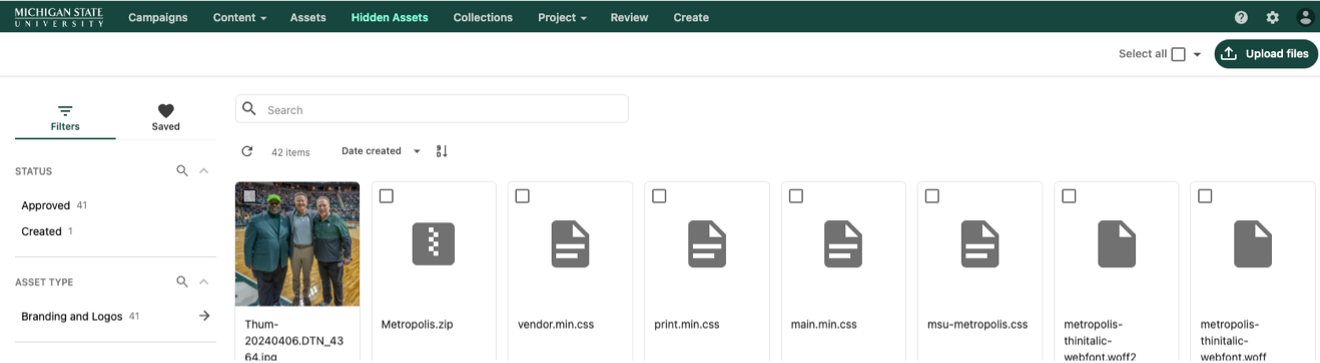
The hidden assets page
Fig. 1: The Hidden Assets page.

Creating Hidden Assets

Hidden assets can be created by Asset Admin users following a similar process to creating a normal asset. 

To create a hidden asset:

  1. Log in to Content Hub.
  2. Click the Hidden Assets tab. This is only available to users with the Asset Admin role.
  3. Click the Upload files button at the top right corner of the page. An “Upload files” screen will appear.
  4. Choose to upload a file from the device or from an import link. Users may use the file selection tool to select a file or drag and drop files onto the interface. Multiple files can be selected.
  5. Click Upload file button.
  6. While the asset upload processes, edit metadata and taxonomy, as needed, following the same guidance as provided for normal assets. See "Create, Edit and View an Asset" for additional information. 

To approve a hidden asset:

Hidden assets that are not yet approved can be approved directly. This bypasses the need for the workflow since no other users can view the asset. To approve directly, click the Direct Publish (rocket ship) icon.
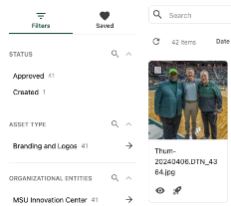
Filters on the Hidden Assets page are shown on the left. The Direct Publish icon appears below the asset thumbnail.
Fig. 2: Filters on the Hidden Assets page are shown on the left. The Direct Publish icon appears below the asset thumbnail.


Documentation updated: June 16, 2025

Is there an issue with this documentation? Report it here.