Jump to HeaderJump to Main ContentJump to Footer
Michigan State University
Digital Experience Studio

University Communications and Marketing

Digital Experience Studio

  • Experience Program
    • Website Project Process
    • Working with a Vendor
    • Glossary
    • Taxonomy Data Dictionary
  • |
  • Experience Design
    • Website Strategy
    • Website Structure
    • Information Architecture and Navigation
    • User-Centered Design Conventions
    • Common UX Issues
    • Enterprise Design System
    • Content Planning
    • Creating Accessible Content
    • Taxonomy and Filters
  • |
  • Website Technology
    • Web Standards
    • Search Engine Optimization
    • Cascade CMS
    • Sitecore CMS
    • Content Hub Overview
    • Content Hub DAM
    • Content Hub Operations

    SitecoreAI

    Sitecore user login
  • |
  • Social Media
    • Alt Text Bookmarklet
    • Meta Ad Pixel
    • Social Media and Web Integration
    • Sprinklr

    Sprinklr

    Sprinklr user login
  • |
  • Analytics
    • Google Analytics (GA4)
    • Testing
    • Data Visualization

    Google Analytics

    Google Analytics user login
  • |
  • News and Events
    • News and Updates
    • Events and Trainings
Digital Experience Studio

University Communications and Marketing

  • Experience Program
  • Experience Design
  • Website Technology
  • Social Media
  • Analytics
  • News and Events

< Experience Program

  • Website Project Process
  • Working with a Vendor
  • Glossary
  • Taxonomy Data Dictionary

< Experience Design

  • Website Strategy
  • Website Structure
  • Information Architecture and Navigation
  • User-Centered Design Conventions
  • Common UX Issues
  • Enterprise Design System
  • Content Planning
  • Creating Accessible Content
  • Taxonomy and Filters

< Website Technology

  • Web Standards
  • Search Engine Optimization
  • Cascade CMS
  • Sitecore CMS
  • Content Hub Overview
  • Content Hub DAM
  • Content Hub Operations

SitecoreAI

Sitecore user login

< Social Media

  • Alt Text Bookmarklet
  • Meta Ad Pixel
  • Social Media and Web Integration
  • Sprinklr

Sprinklr

Sprinklr user login

< Analytics

  • Google Analytics (GA4)
  • Testing
  • Data Visualization

Google Analytics

Google Analytics user login

< News and Events

  • News and Updates
  • Events and Trainings
Digital Experience Studio > Website Technology > Content Hub > Content Hub Operations >

Transferring Story Ownership

Michigan State University

MSU Tools and Resources

  • A to Z Index
  • Find People
  • Email
  • Tech Support
  • Social Media Directory

Communications Resources

  • University Communications and Marketing
  • University Trademarks and Licensing
  • MSU Brand Studio
  • MSU Editorial Style Guide
  • MSU Photos

Contact us

517-355-7505

Address

Michigan State University 408 West Circle Drive East Lansing, MI 48824

Follow Us

  • Visit our Facebook page
  • Visit our page on X
  • Visit our Instagram page
  • Visit our LinkedIn page
  • Visit our YouTube page
  • Visit our TikTok page

If you're having accessibility issues, please let us know.

Know MoreTransparency Reporting: Budget & Salary/Compensation
Michigan State University
  • Contact Information|
  • Site Map|
  • Privacy Statement|
  • Site Accessibility|
  • Call MSU: (517) 355-1855|
  • Visit: msu.edu|
  • Notice of Nondiscrimination|

SPARTANS WILL|© Michigan State University|

Transferring Story Ownership

Content Hub limits who can advance a story throught the established workflows as well as who can make changes to a published story. Those users are:

  • Original content creator
  • Secondary publisher
  • Staff publisher, (Validate Taxonomy step only)
  • Content administrators

Student Author Submissions

Student users do not have publishing rights. When a student initiates and produces a story, they must select a staff publisher. The student author can advance a story through the workflow from initiation to Validate Taxonomy. At that point, the designated staff publisher must review the taxonomy and content, make any changes necessary and publish the story. The designated staff publisher also can make changes and republish, if needed. 

How to Assign a Staff Publisher

  1. Identify a different author who will publish the story. Coordinate with this user so they’re aware of the publishing date and can ask any questions ahead of time.
  2. Build the story as normal using Content Hub.
  3. Select the designated publisher in the “Staff Publisher” field in the “Details” tab of the story.
  4. Advance the story through the workflow as far as the Validate Taxonomy stage. At this point, the top right corner of the story builder window in Content Hub will display “Validate Taxonomy” as the status and “Prepare to Publish” as the next step button. See Figure 1.
  5. At this point, the designated publisher will be able to complete the workflow and publish the story.
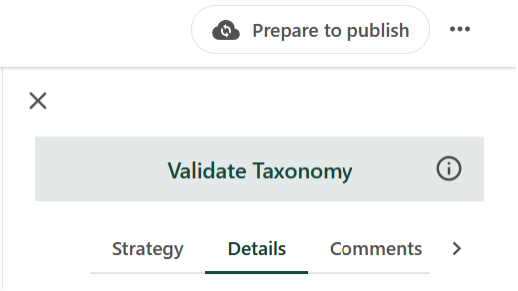
The sidebar menu shows a next available step button reading
Figure 1: The story builder window shows the story has progressed through to the Validate Taxonomy step.


Secondary Publisher

At any point in a story workflow, excluding statements, an author may assign a secondary publisher. This user will be able to advance the story through the workflow based on their permissions. The Review and Edit steps cannot be skipped. 

Only the original content creator can select the initial secondary publisher. After that, the secondary publisher may transfer ownership again. Only one secondary publisher can be selected at a time.  

How to Assign a Secondary Publisher

  1. Identify a different author who will publish the story. Coordinate with this user so they’re aware of the publishing date and can ask any questions ahead of time.
  2. Build the story as normal using Content Hub.
  3. Select the designated user in the “Secondary Publisher” field in the “Details” tab of the story.
  4. Click Save.
  5. Next to the workflow buttons, select “Assign.” See Figure 2.
A button with
Figure 2: The Assign button. After an initial secondary publisher has been assigned, this becomes a "Reassign" button.
  1. The secondary publisher can be seen by clicking the “i” information icon next to the status indication bar to display the full workflow. See Figure 3.
A screenshot of the Main Workflow description. Text reads: Main Workflow: Includes news releases, features (robust), all voices and views, admin stories, ask the expert, media advisories and expert advisories. Initiate Content: Content authors or student authors enter the content details about the story, including the planned launch date and primary strategy. [The two added users appear listed.] Content Development: Content authors prepare the story draft in a Word doc saved in the ++ Content Hub folder. Once back in Content Hub, authors must add a link to the Word fil in the Comments and select a reviewer before proceeding to the next step. If the story is initiated by a student, it is recommended the student tag the responsible staff member in the Comments when submitting for review. [The added users are listed.]
Figure 3: Displaying the full workflow shows the users that have access to the content at each stage. 


Documentation updated: July 2, 2026

Is there an issue with this documentation? Report it here.