Jump to HeaderJump to Main ContentJump to Footer
Michigan State University
Digital Experience Studio

University Communications and Marketing

Digital Experience Studio

  • Experience Program
    • Website Project Process
    • Working with a Vendor
    • Glossary
    • Taxonomy Data Dictionary
  • |
  • Experience Design
    • Website Strategy
    • Website Structure
    • Information Architecture and Navigation
    • User-Centered Design Conventions
    • Common UX Issues
    • Enterprise Design System
    • Content Planning
    • Creating Accessible Content
    • Taxonomy and Filters
  • |
  • Website Technology
    • Web Standards
    • Search Engine Optimization
    • Cascade CMS
    • Sitecore CMS
    • Content Hub Overview
    • Content Hub DAM
    • Content Hub Operations

    SitecoreAI

    Sitecore user login
  • |
  • Social Media
    • Alt Text Bookmarklet
    • Meta Ad Pixel
    • Social Media and Web Integration
    • Sprinklr

    Sprinklr

    Sprinklr user login
  • |
  • Analytics
    • Google Analytics (GA4)
    • Testing
    • Data Visualization

    Google Analytics

    Google Analytics user login
  • |
  • News and Events
    • News and Updates
    • Events and Trainings
Digital Experience Studio

University Communications and Marketing

  • Experience Program
  • Experience Design
  • Website Technology
  • Social Media
  • Analytics
  • News and Events

< Experience Program

  • Website Project Process
  • Working with a Vendor
  • Glossary
  • Taxonomy Data Dictionary

< Experience Design

  • Website Strategy
  • Website Structure
  • Information Architecture and Navigation
  • User-Centered Design Conventions
  • Common UX Issues
  • Enterprise Design System
  • Content Planning
  • Creating Accessible Content
  • Taxonomy and Filters

< Website Technology

  • Web Standards
  • Search Engine Optimization
  • Cascade CMS
  • Sitecore CMS
  • Content Hub Overview
  • Content Hub DAM
  • Content Hub Operations

SitecoreAI

Sitecore user login

< Social Media

  • Alt Text Bookmarklet
  • Meta Ad Pixel
  • Social Media and Web Integration
  • Sprinklr

Sprinklr

Sprinklr user login

< Analytics

  • Google Analytics (GA4)
  • Testing
  • Data Visualization

Google Analytics

Google Analytics user login

< News and Events

  • News and Updates
  • Events and Trainings
Digital Experience Studio > Website Technology > Sitecore CMS > Sitecore User Guide >

Naming a Page

MSU Tools and Resources

  • A to Z Index
  • Find People
  • Email
  • Tech Support
  • Social Media Directory

Communications Resources

  • University Communications and Marketing
  • University Trademarks and Licensing
  • MSU Brand Studio
  • MSU Editorial Style Guide
  • MSU Photos

Contact us

517-355-7505

Address

Michigan State University 408 West Circle Drive East Lansing, MI 48824

Follow Us

  • Visit our Facebook page
  • Visit our page on X
  • Visit our Instagram page
  • Visit our LinkedIn page
  • Visit our YouTube page
  • Visit our TikTok page

If you're having accessibility issues, please let us know.

Know MoreTransparency Reporting: Budget & Salary/Compensation
  • Contact Information|
  • Site Map|
  • Privacy Statement|
  • Site Accessibility|
  • Call MSU: (517) 355-1855|
  • Visit: msu.edu|
  • Notice of Nondiscrimination|

SPARTANS WILL|© Michigan State University|

Naming a Page

There are several places where pages can be named in Sitecore. How the name fields are approached impacts how the name displays within the system and publicly to website visitors.

Initial Page Name and URL

When initially creating a page, use letters, hyphens or spaces, but no other special characters. This initial name impacts the page URL and appears in the Site Content Tree.
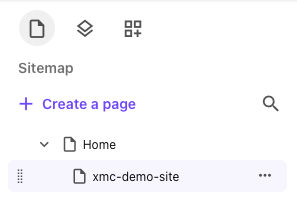
The page xmc-demo-site is highlighted in the sitemap content tree.
Figure 1: The initial page name is URL-friendly and appears in the Site Content Tree.


Name Displayed in Content Tree

To change how the page name appears in the Site Content Tree within Sitecore:

In Page Builder:

  1. Locate the page in the Site tree (left-side panel).
  2. Click the “…” icon to the right of the page name and click Settings.
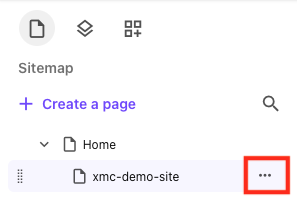
The ellipses menu icon next to the page name is outlined in red.
Figure 2: To change the Display name, click the menu icon to access the Rename menu option.
  1. Change the Display name field. You can use spaces in this field. It is for internal use only.
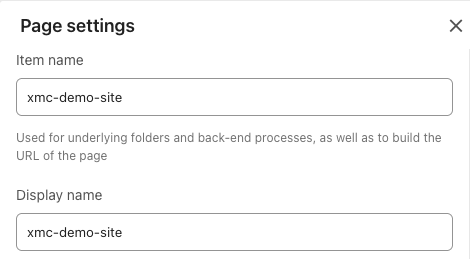
    Item name and Display name both show xmc-demo-site
    Figure 3: When initially added, the Display name matches the Item name. The Item name controls the page URL.
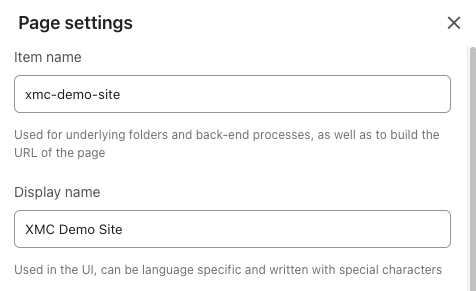
Item name shows xmc-demo-site and Display name reads
Figure 4: The Display name can be changed but the Item name should be left as is. The Item name controls the page URL.
  1. Click the X in the top right corner to close the Settings panel. The Site Content Tree now shows the new Display name. 
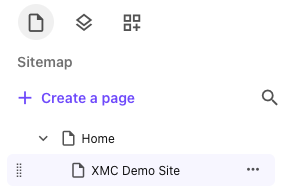
    The site name now displays as
    Figure 5: The Site Content Tree display name may be easier for content authors to read but it will not impact the website visitor experience. 


    Note: Changing this field will not update the public display of the page name, such as what a site visitor would see in navigation. 

    The breadcrumb navigation shows the page name as xmc-demo-site
    Figure 6: The navigation and breadcrumb components still display the Item name.

Page Name Visible to Visitors

To change the visible page name that is referenced in the Main Navigation, Page Title and Contextual Navigation components:

Method 1: Edit Using Content Editor

In Content Editor:

  1. Locate the page in the Site Content Tree. Click to select.
  2. Change the Title field and the Browser Title fields to the desired page name.
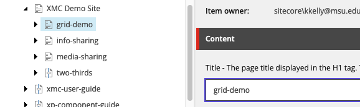
Screenshot showing the page title field in Content Editor
Figure 7: The Title field displays the initial page name.
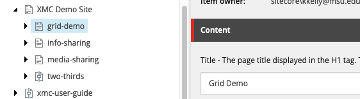
Screenshot showing the page title field in Content Editor
Figure 8: The Title field can be updated for a public facing name.


Note: The Browser Title field controls the site name on the search results page. Be sure to include the page name in this field on the Home page.
  1. Click Save.
  2. View in Page Builder. Refresh the canvas, if necessary.
  3. The Breadcrumb or Page Title component will update to show the change.
Screenshot showing the breadcrumb on a page
Figure 9: The Breadcrumb component now displays the new page title. 
Note: This is the most reliable method. This method also allows content authors to set a Page Title and Browser Title that differs from the title field displayed in a Hero Banner. 
Method 2: Edit Using Page Title Component

Documentation updated: June 15, 2026

Is there an issue with this documentation? Report it here.

  1. Add a Page Title component to the Main Body content area.
Screenshot showing the breadcrumb and page title on a page
Figure 10: A new Page Title component will show the initial page title. The initial page title is also visible in the Breadcrumb, above.
  1. Update the text in the field to your desired page name.
Screenshot showing the breadcrumb and page title on a page
Figure 11: The title can be updated by changing the text in the Page Title component.
  1. Refresh the page. The breadcrumb should now update to match the page name, confirming the change was accepted.
Screenshot showing the breadcrumb and page title on a page
Figure 12: Refreshing the page canvas forces the Breadcrumb component to update and match the new title in the Page Title component.
  1. Delete the Page Title component if it is not needed.
Note: This will not impact the Browser Title, which displays on the search page. To change the Browser Title, use Method 1.